Billiards & Snooker — 07 · Cushions (庫邊)
Every escape, double and positional shot uses a cushion. "Angle in equals angle out" is a good start, but pace and spin bend it. This lesson covers how the cushion meets the ball, the mirror point and when it works, how pace and spin bend the line, how far the white comes back off a cushion, running and check side (and when they matter), two-cushion routes, a ball on the cushion, and the white touching the cushion.
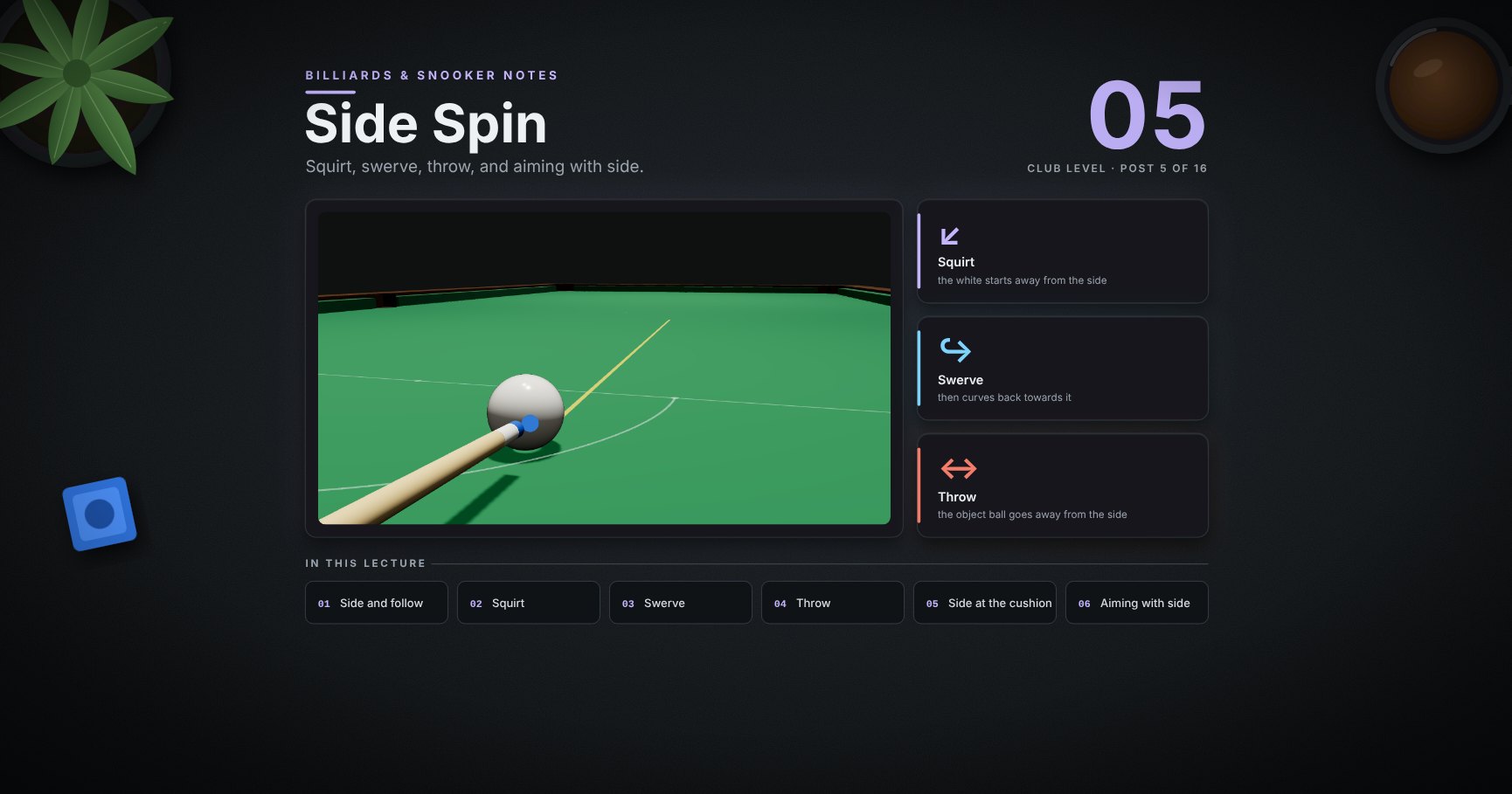
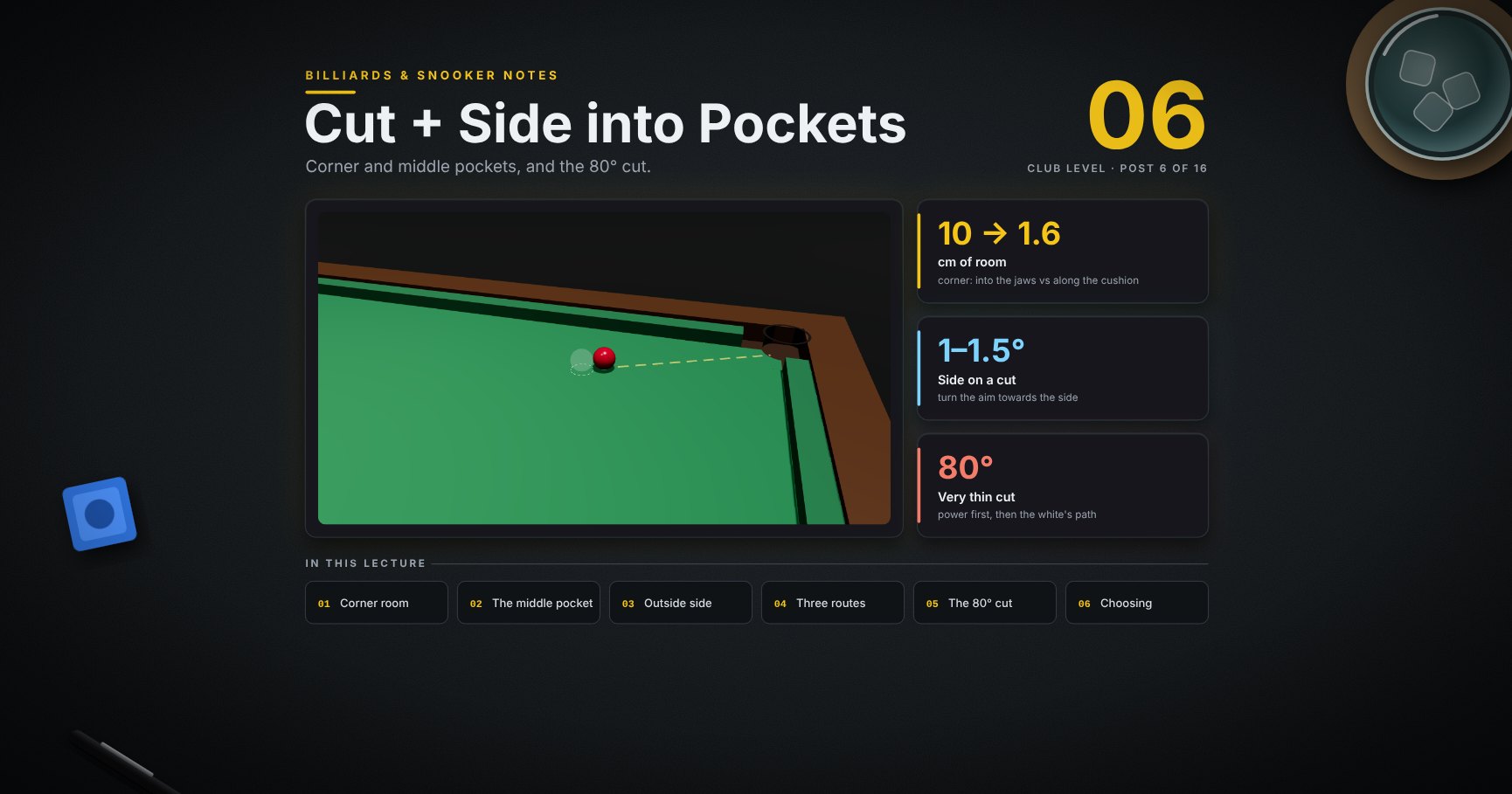
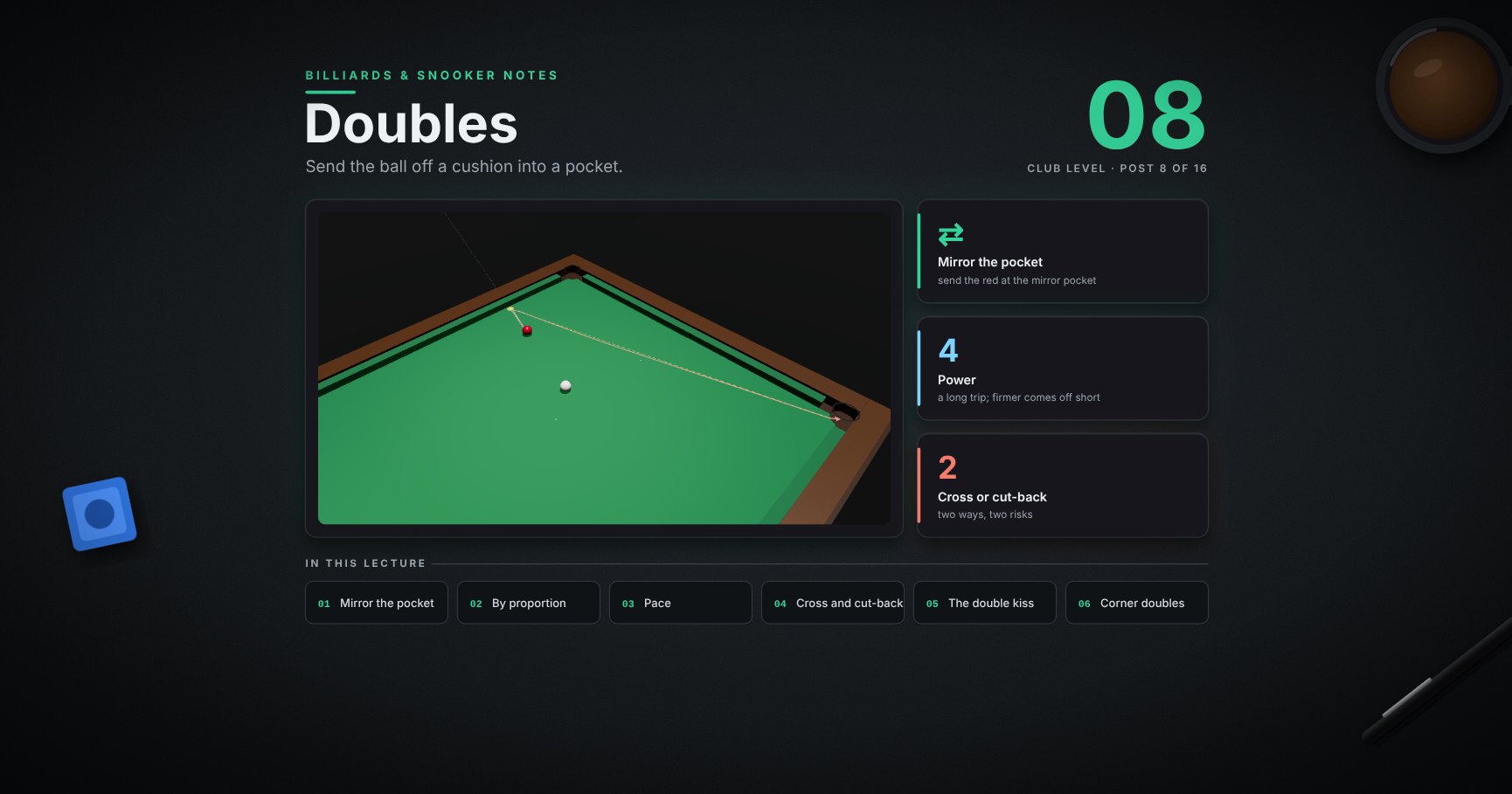
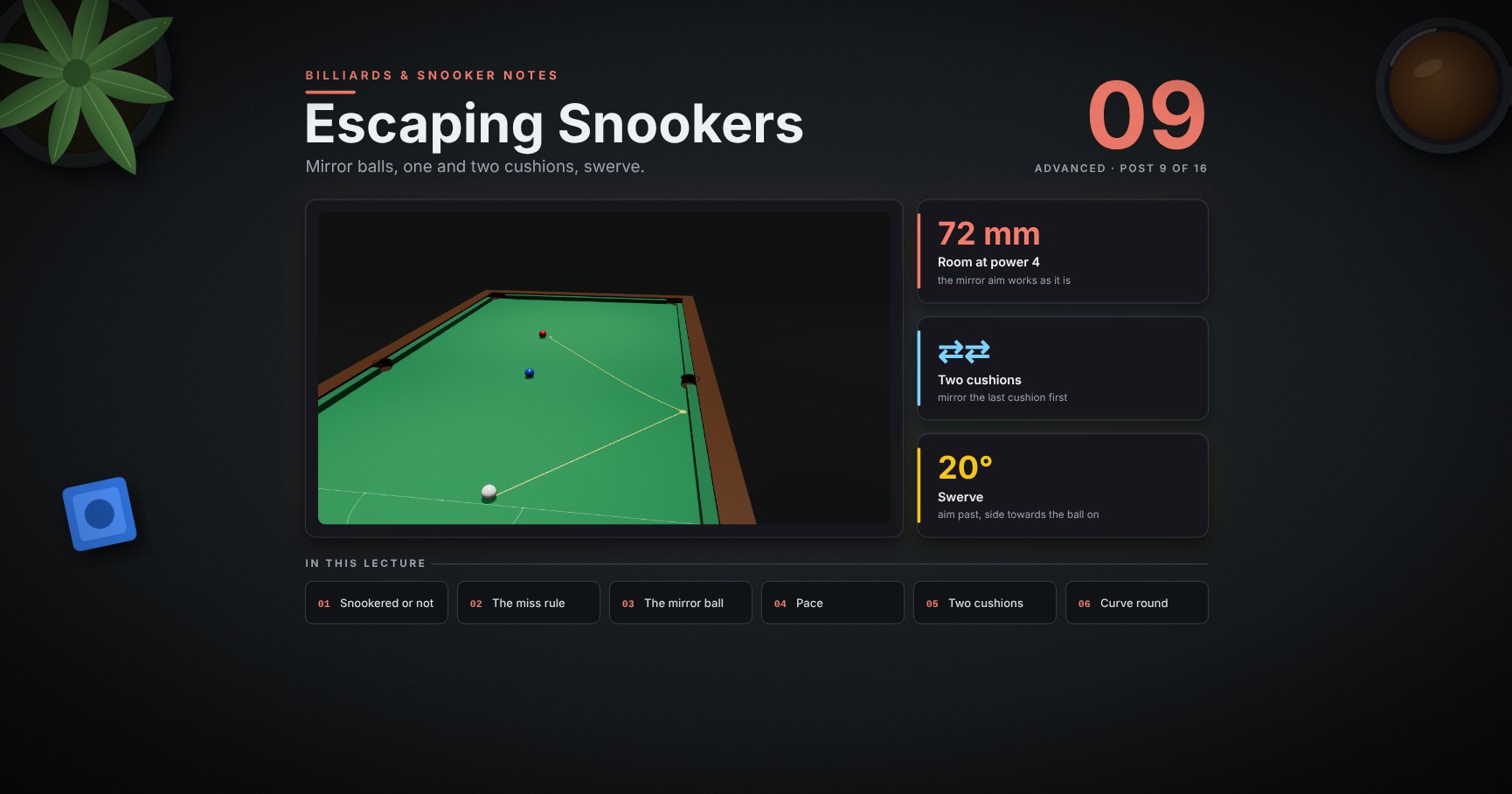
Series map. ★ Basics: 01 Cue action and elevation → 02 Aiming and potting → 03 Tip and power → 04 Where the white goes · ★★ Club: 05 Side spin → 06 Cut and side into pockets → 07 Cushions (this post) → 08 Doubles · ★★★ Advanced: 09 Escaping snookers → 10 Multi-ball shots → 11 Safety → 12 Position play · ★★★★ Hard: 13 Break-building → 14 Special shots · Reference: 15 Rules, tactics and practice · ★★★★★ Pro: 16 Cue-ball control.
Learning Outcome
- Know where the cushion touches the ball, and why it takes spin off.
- Find a cushion point with the mirror point, and adjust it for pace and spin.
- Control how far the white comes back off a cushion.
- Use running side and check side, and know when side makes a big difference.
- Plan a two-cushion route.
- Pot a ball sitting on the cushion, and play the white when it touches the cushion.
Chapter 1 — How the cushion works
1 · Where the cushion meets the ball
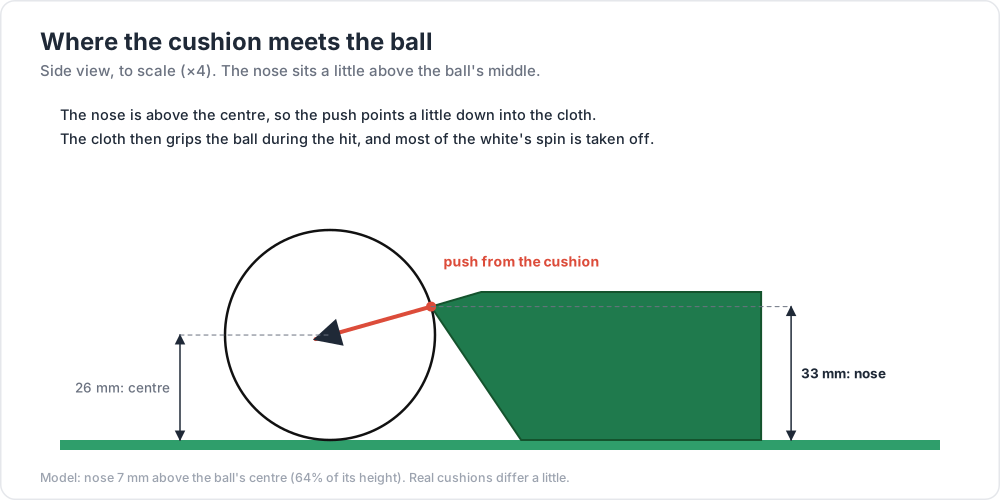
The cushion's nose is a little above the middle of the ball, about 64% of its height in the model. So the push from the cushion points slightly down, pressing the ball into the cloth during the hit. The cloth then grips it, and most of the white's spin comes off at the cushion.
This is why, after a cushion, spin effects are smaller than you might expect, and why the angle off the cushion is the thing that changes.
2 · The mirror point, and when it works
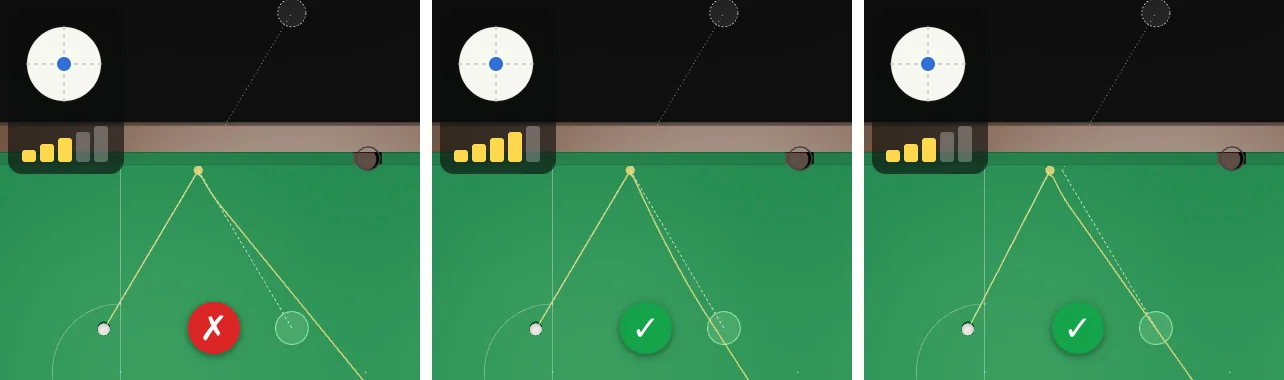
To send the white off a cushion to a spot: reflect the spot behind the cushion (the mirror point) and aim at it.
That works when the white is still sliding at the cushion. A white that is already rolling comes off a little flatter and runs on.
| Hit | Where it goes (model, 80 cm to the cushion) |
|---|---|
| 1 · power 3, centre ball (rolling by the cushion) | about 12 cm past the target ✗ |
| 2 · the same aim, power 4 (still sliding) | within 4 cm ✓ |
| 3 · power 3, aim about 5 cm shorter along the cushion | on target ✓ |
Two good answers: play it firmer, or keep the slow pace and aim shorter. Choose by where you want the white to stop.
Trick: reflect the target in the line where the white's centre touches the cushion, half a ball out from the rubber, not in the rubber itself.
3 · Pace and spin bend the line
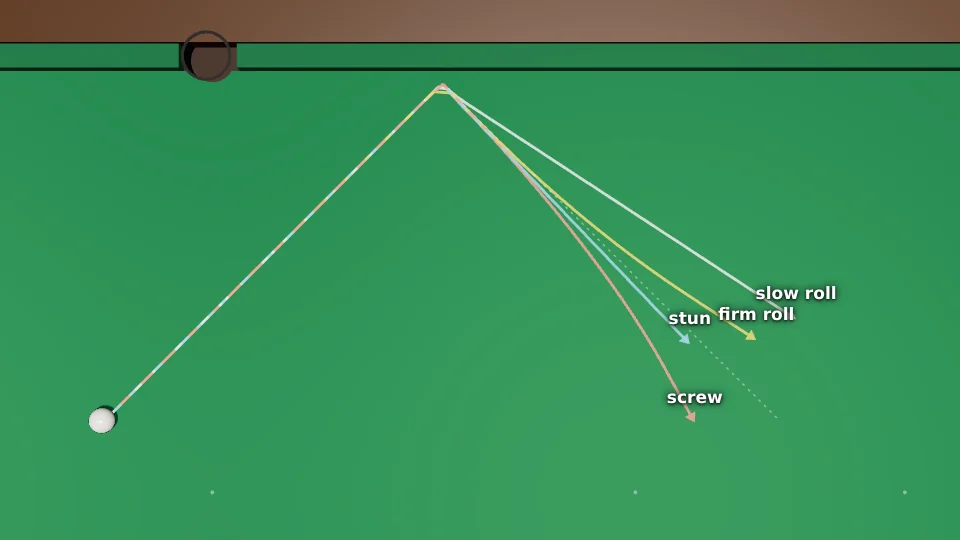
The same line in at 45°, four hits:
| Hit | Off the cushion at… | Then |
|---|---|---|
| slow roll (power 2, a little above centre) | 35° | almost straight |
| firm roll (power 4, a little above centre) | 39° | straight |
| stun (power 3, below centre, sliding at the cushion) | 47° | straight: angle in = angle out |
| screw (power 4, below centre, still spinning back) | 48° | bends away, to 52° |
A rolling white comes off flatter (the slower, the flatter), a stun follows the mirror, and backspin makes it steeper and bends it away.
4 · Straight in and back: the tip sets the distance
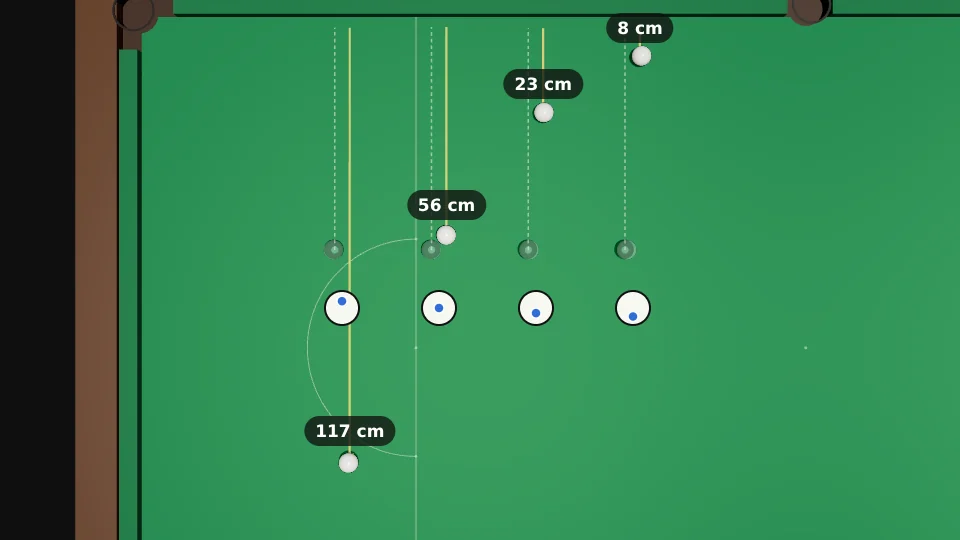
Four whites, 60 cm from the cushion, straight in at power 2. Only the tip changes (model):
| Tip | Comes back from the cushion |
|---|---|
| top (7/10 height) | 117 cm |
| centre | 56 cm |
| a little low | 23 cm |
| low | 8 cm |
A high tip rolls from the start and arrives with the most pace. A low tip spends pace on the cloth while its backspin wears off (post 03), so it arrives slowly and dies near the cushion.
Trick: to leave the white tight on a cushion (a good safety, post 11), go straight in with a low tip and soft pace.
Chapter 2 — Side at the cushion
5 · Running side and check side
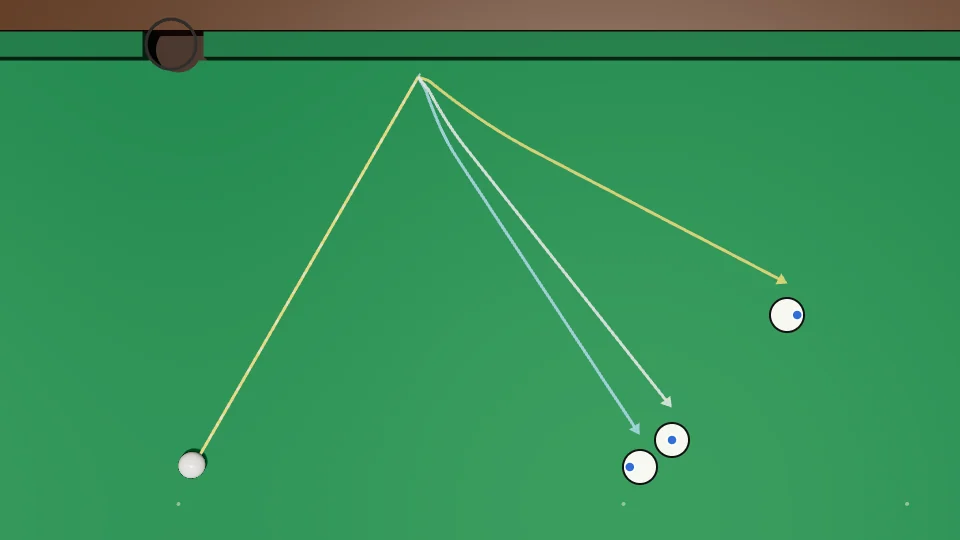
- Running side makes the white run on: it comes off wider (flatter to the cushion) and keeps more pace.
- Check side holds it: it comes off narrower (squarer) and slower.
Which is which? Look at the way the white will turn off the cushion. Here it turns right, so right-hand side is running side.
6 · Side matters most when you hit the cushion square
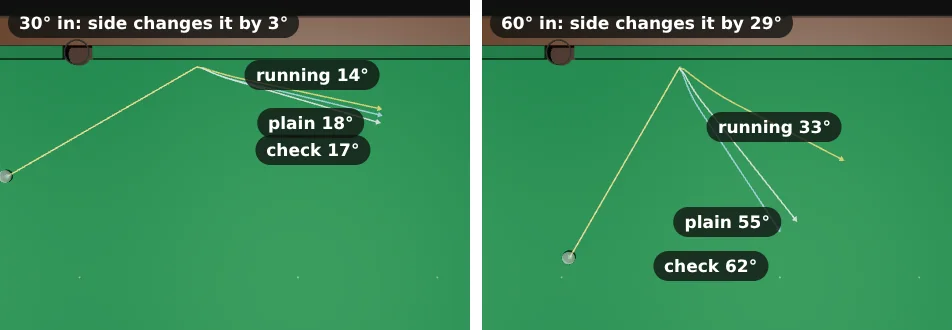
The same side, two lines in (model, power 3, side 0.6 R):
| Line in | Check | Plain | Running | Side changes it by |
|---|---|---|---|---|
| 30° (shallow) | 17° | 18° | 14° | 3° |
| 60° (square-ish) | 62° | 55° | 33° | 29° |
On a shallow line, the white is already sliding along the cushion and side has little to add. Coming in squarer, side changes everything. So when you need side for the angle, come into the cushion squarer.
7 · Watch it: running side opens the angle
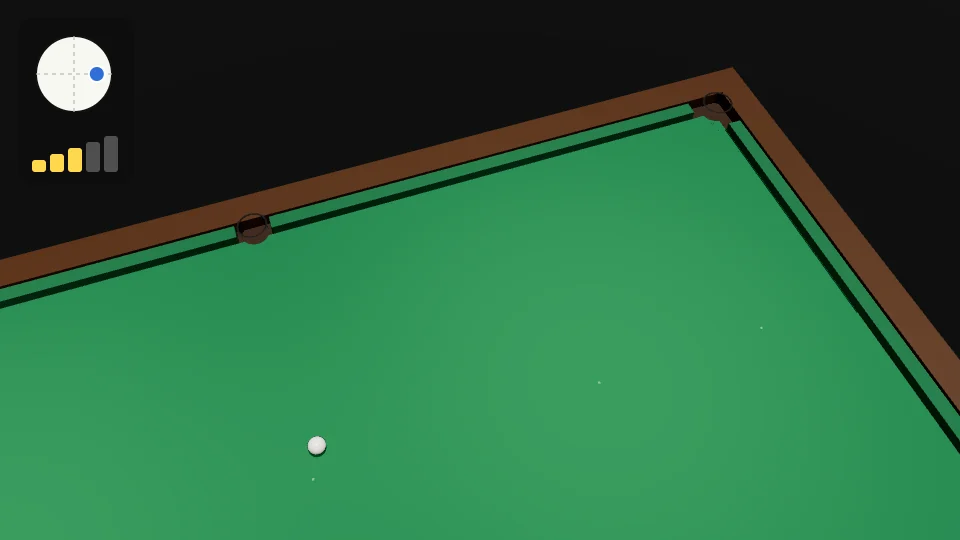
Right-hand side, power 3. Off the cushion, the white runs on down the table instead of coming back across.
8 · Two cushions for position
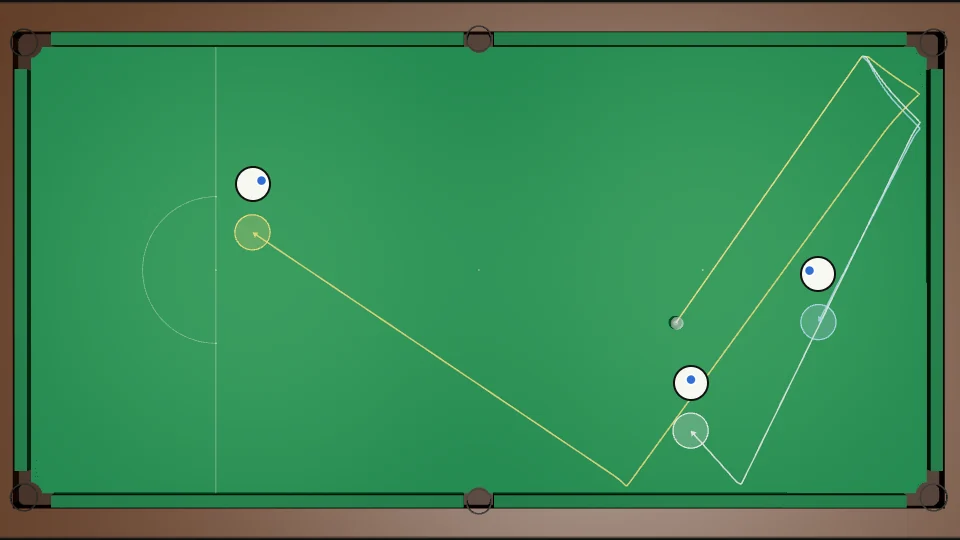
The same aim, into the top cushion near the corner and off the end cushion, power 3 (model):
| Tip | Where the white ends |
|---|---|
| check side | stays near the end cushion, after two cushions |
| plain (a touch of top) | lower down the right half, after three |
| running side | right across into the other half, after three |
Each cushion multiplies a small change in the angle. That makes two-cushion routes powerful for position, and also less accurate: pick the route with the widest landing area, not the cleverest one.
Chapter 3 — Balls on the cushion
9 · Potting a ball on the cushion
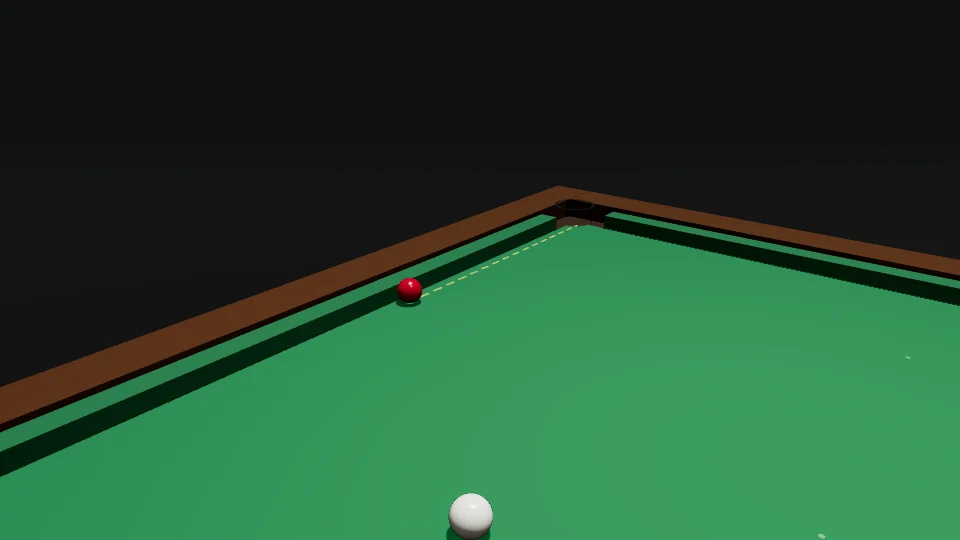
A red frozen on the cushion is hard to pot along it. If the white hits the red first, the red bounces off the cushion and away from the pocket.
Hit the cushion and the red at the same moment (the cushion a hair first is fine). In the clip, power 3, the white's centre aims about 4 cm to the cushion side of the red's centre, and the window is tiny.
Common pitfall: playing it soft "to be safe". In the model, at power 2 no aim potted this red; at power 3 the "together" aim did.
10 · The white touching the cushion
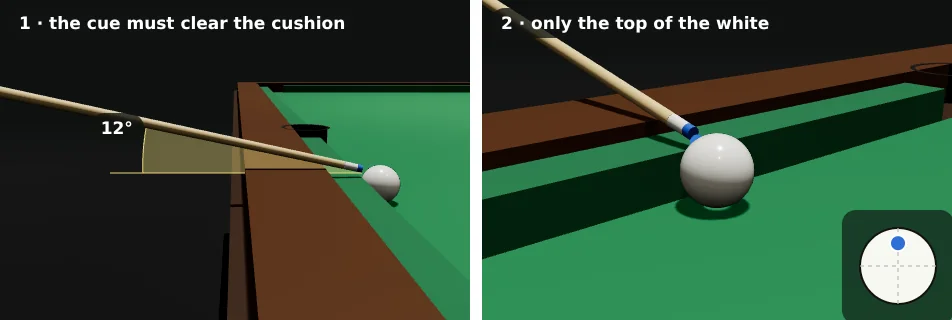
When the white touches the cushion and you cue away from it, the cushion and the rail are right behind the white:
- The cue has to pass over the cushion, so the tip can only reach the top of the white: at least about 0.55 R above centre (model sizes).
- The cue rises about 12° to clear the rail's edge.
So from the cushion, you play with topspin: no screw, no real stun. Plan the next shot for a white that follows, and keep the side small (a raised cue with side swerves, post 05).
Try it at the table
| Drill | Set-up | Look for |
|---|---|---|
| Mirror point | the white in the D; a coin on the table; off one side cushion to the coin | first with power 4, then power 3 aimed shorter |
| Four hits | the same line in at 45°, slow roll, firm roll, stun, screw | how far each one bends |
| Back off the cushion | straight in from 60 cm, power 2: top, centre, low | 1 m, half a metre, and dead near the cushion |
| Shallow vs square | the same side at 30° in and at 60° in | side changes the 60° shot far more |
| Two cushions | into the top cushion near a corner, check, plain, running | three landing spots |
| Frozen red | a red on the side cushion 70 cm from the corner | the red stays on the cushion |
Cheat-sheet
| Cushion nose | a little above the ball's middle; takes most spin off |
| Mirror point | reflect the target half a ball behind the cushion; aim at it |
| Works best | when the white still slides at the cushion (firmer, or below centre) |
| Rolling white | comes off a little flatter; aim a touch shorter |
| Backspin | comes off steeper and bends away |
| Coming back | top comes back far; low dies near the cushion |
| Running / check side | wider and faster / narrower and slower; big effect only when you come in squarer |
| Ball on the cushion | cushion and ball together, medium pace |
| White on the cushion | tip high, cue raised about 12°: the white will follow |
What's next
08 · Doubles (反彈). The same cushion ideas for the ball you hit: the mirror double, the cross double, the cut-back, and the kiss to avoid.
References
- Dr. Dave Alciatore, rail rebound with follow, draw and English; running and reverse (check) English; ball frozen on the rail. https://billiards.colostate.edu/
- WPBSA, Official Rules (2022): table and ball sizes. https://wpbsa.com/rules/
- Angles and distances come from the physics model (cushion restitution 0.8, cushion friction 0.2, the nose 7 mm above the ball's centre, cloth friction during the hit). Real cushions vary; the directions of the effects are the same, the exact degrees are not. The white-on-the-cushion numbers are geometry with model sizes (cushion top 36 mm, rail 48 mm).
Note: this post is in progress. Planned additions: the plain-ball natural angle off the top cushion, and three-cushion routes.